

 BACK
BACK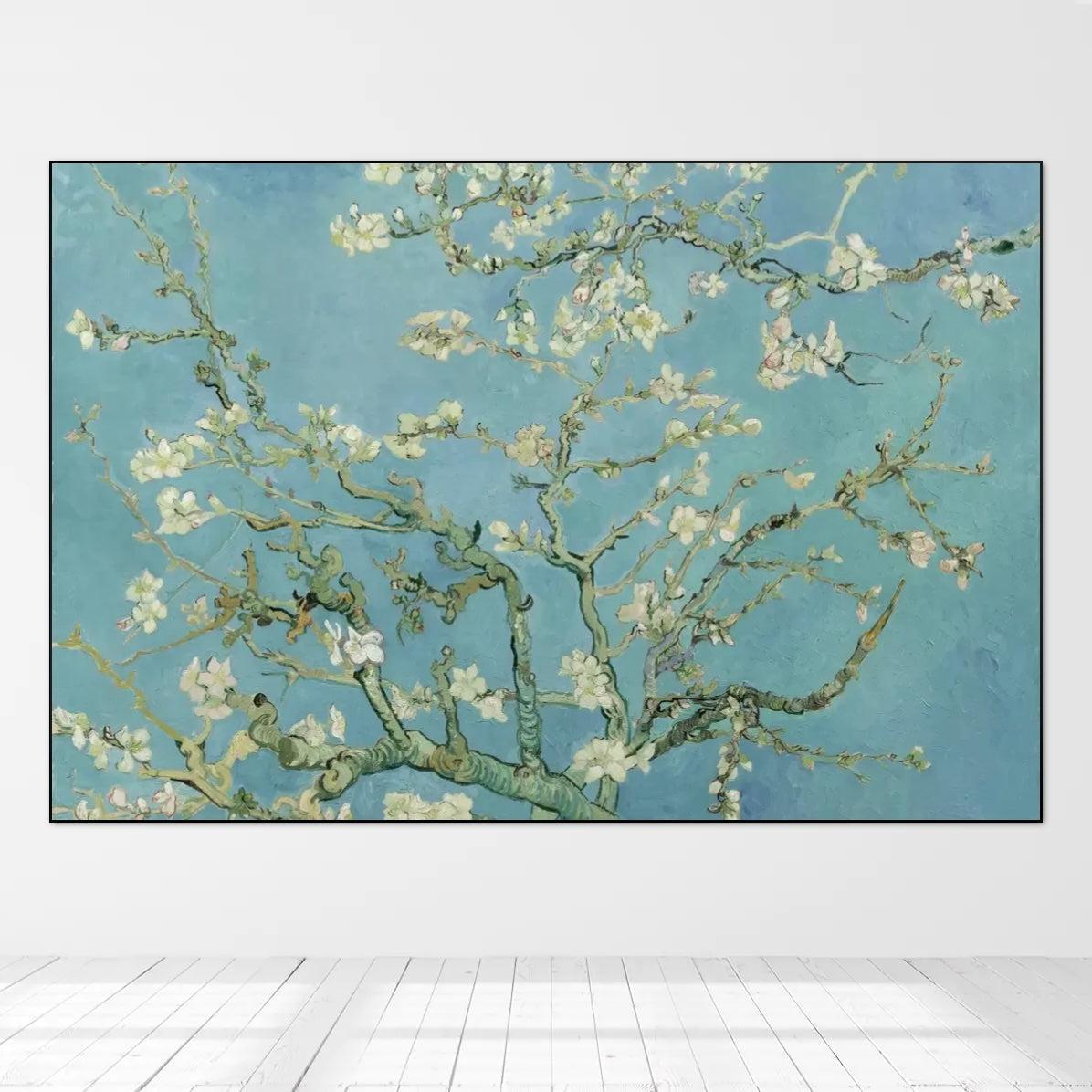

A large, blank wall can feel like one of the trickiest decorating challenges in any home. Too much empty space makes a room feel cold and unfinished, but filling it with the wrong thing can throw off the entire look. The truth is, large walls are not a problem to solve, they are an opportunity. With the right approach, a big wall becomes the most impactful feature in your space, the thing guests notice first and remember longest. It just takes knowing where to start, and that is exactly what this guide is here for.
Inside, you will find practical ideas for every style and budget, from going bold with a single oversized statement piece to building a thoughtfully planned gallery wall that feels collected rather than cluttered. We cover why contemporary abstract art works so reliably on large walls, how canvas prints can stretch your budget without sacrificing impact, and how to think about large walls differently depending on which room you are working with.
Go Big with a Single Statement Piece
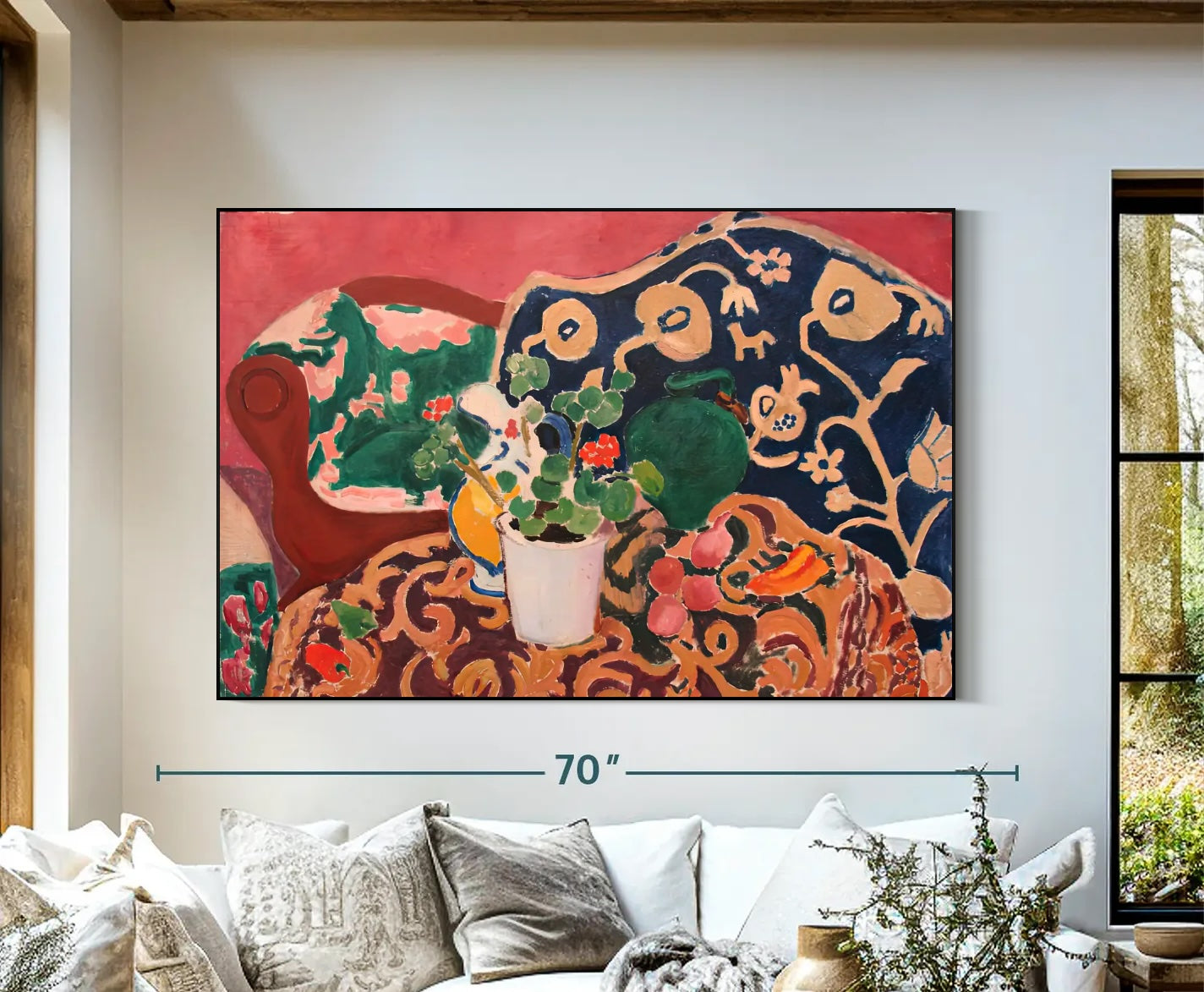
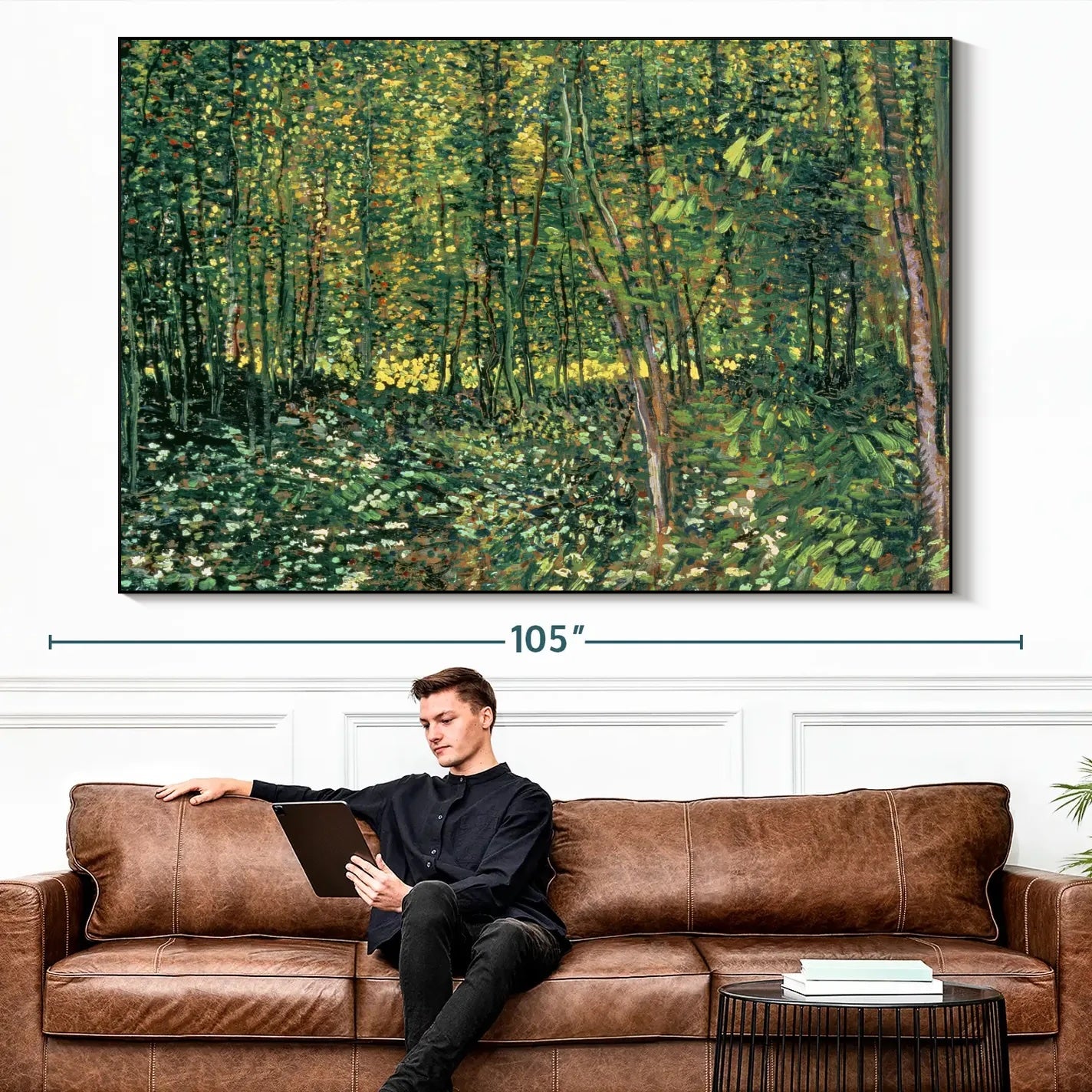
The simplest and most effective approach to a large wall is also the most overlooked one: one oversized piece of art, hung well, on its own. No gallery arrangement, no layering, just a single work that owns the wall. This works because large walls need a clear focal point, and a strong solo piece delivers exactly that. When shopping for an oversized print, look for compositions that are built to work at scale.
Bold abstracts, wide-format landscapes, and high-contrast photography all hold their own when they go big. Busy, detail-heavy imagery can feel overwhelming at large sizes, so simpler compositions tend to be the better call. Large wall art is designed specifically for spaces that demand scale, which means the prints are built to look sharp and vivid even at sizes that would expose the limitations of a standard piece. If you have been holding back because you were not sure something could go big enough, this is your answer.
Once you have made your pick, getting it up on the wall is straightforward. Follow our step-by-step assembly guide to put it together and hang it securely, so it looks exactly the way it should from day one.
Discover our top large wall decor ideas >>

Gallery Walls Done the Right Way
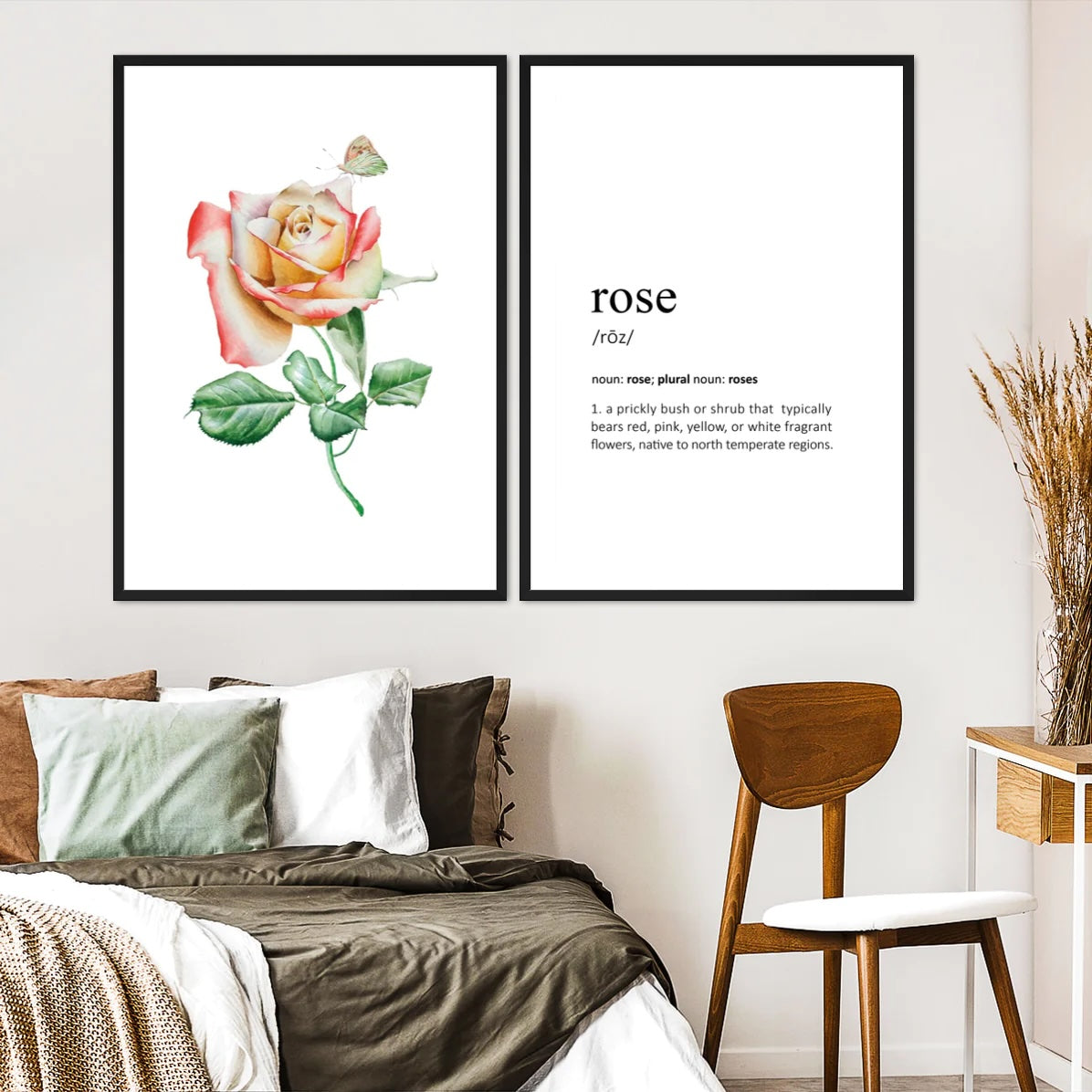
A gallery wall is a great solution for a large wall, but only when it is planned rather than just assembled over time. The ones that look effortless in photos are almost always built around a clear structure: a consistent frame finish, a shared mat color, or a strict grid underneath what appears to be a casual arrangement. Without that backbone, a gallery wall can quickly tip from curated to chaotic. Start by deciding on your organizing principle before you buy or hang anything. Do you want all black frames? A mix of sizes within a tight color palette? Personal photos surrounding one anchor piece? Pick one direction and commit to it. A tight grouping of 4 to 7 pieces with a shared visual thread will always look more intentional than a sprawling collection of twelve pieces with nothing connecting them. For a full walkthrough on planning and hanging your gallery wall, check out our gallery wall guide.
According to our art curator Tirzah Goodman, one of the most common mistakes she sees is hanging art too high. The center of your piece should sit at around 57 to 60 inches from the floor, which aligns with average eye level and is the standard used in galleries worldwide. On a large wall it can feel counterintuitive to leave all that space above the art, but that breathing room is exactly what makes the piece feel grounded rather than lost.
If you have a large wall to decorate, try this >>
Style Ideas & Decorating Tips for Large Walls
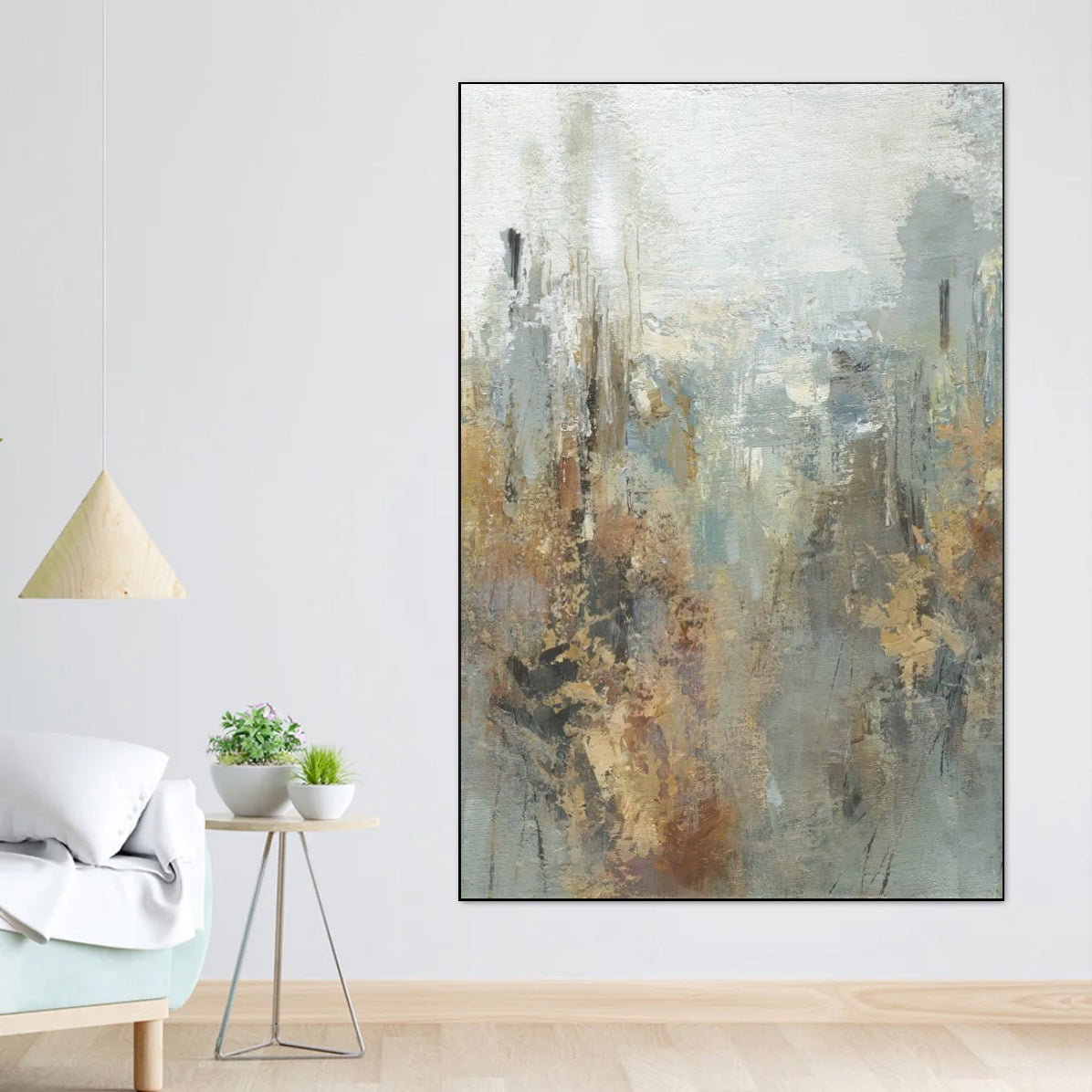
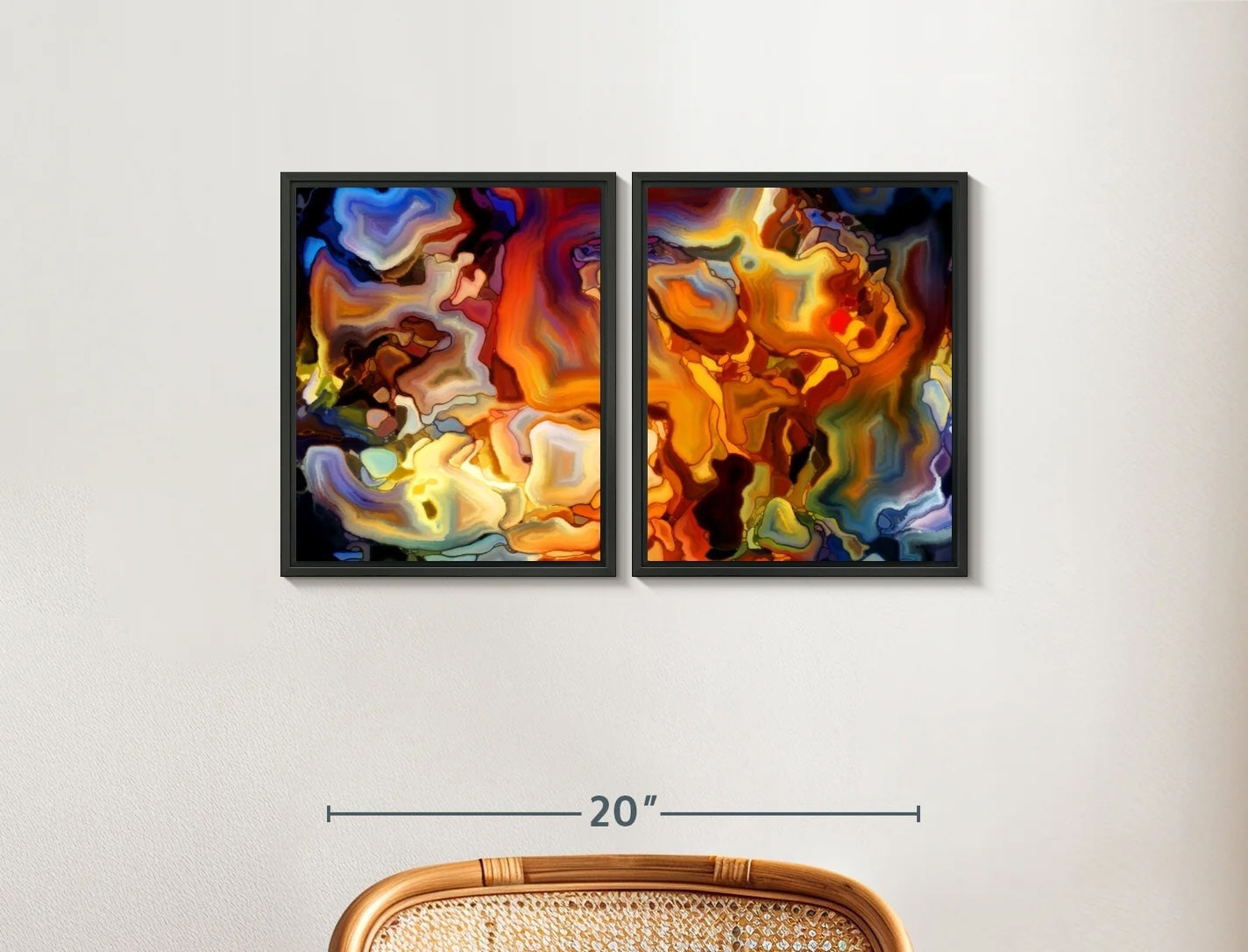
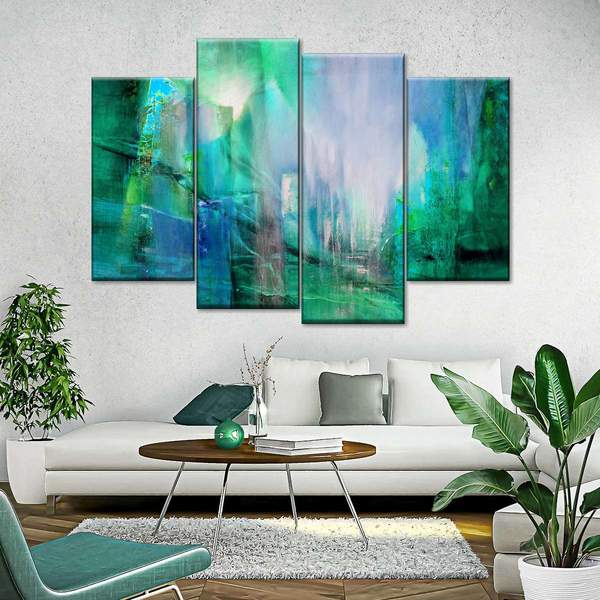
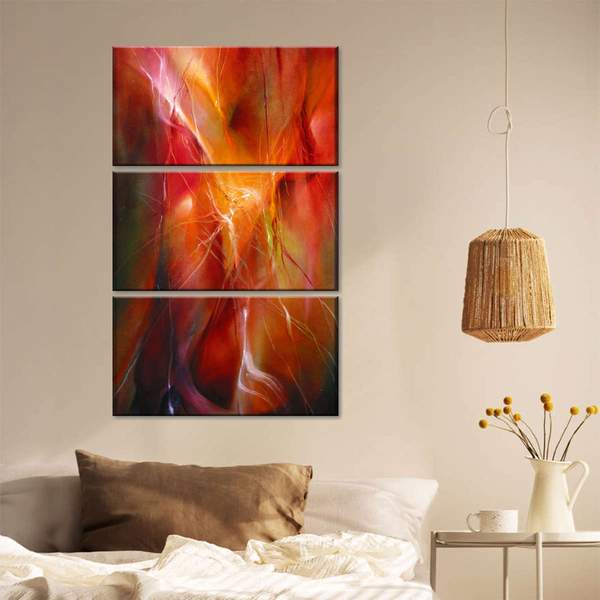
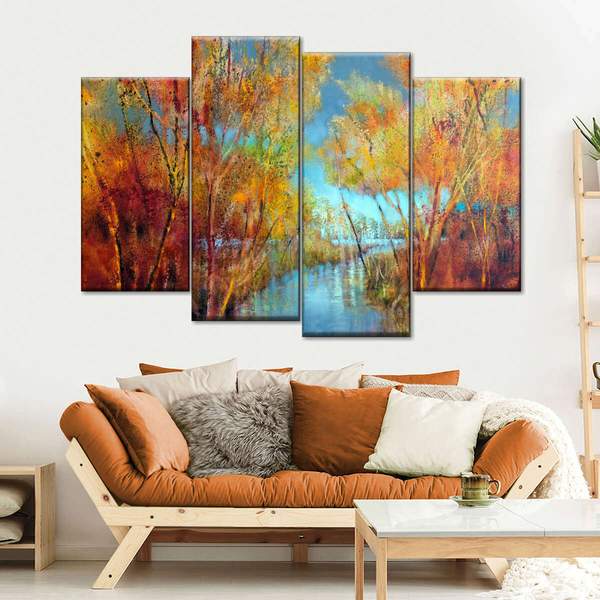
If you are not sure where to start with style, contemporary abstract art is one of the most reliable choices for large walls, and there are real reasons for that. Abstract works are designed around composition at a fundamental level, which means they hold up at scale in a way that more detailed figurative work often does not. They also sit comfortably alongside a wide range of furniture styles and color palettes without demanding that the rest of the room be rebuilt around them.
The category is genuinely broad, spanning everything from large gestural paintings with bold brushwork to quiet minimalist prints with generous open space. That variety means you can find something that fits the existing mood of your room rather than having to reshape the room to fit the art. If your space leans warm and earthy, there is an abstract for that. If it is cool, modern, and minimal, there is one for that too. It is one of those rare categories where the more you look, the more you find that works.
Browse tips on how to decorate a big wall >>
Color Matters More Than You Think
Color is one of those things that can make or break a large wall, and it is worth thinking about before you commit to anything. A piece that looks perfect in isolation can feel completely wrong on a wall once you factor in the paint color, the furniture, the flooring, and the light in the room at different times of day. The key is to look at your space as a whole rather than just the wall itself. You do not need to match colors exactly, in fact a perfect match often feels flat and uninspired.
What you are looking for is harmony, where the tones in your artwork either complement or intentionally contrast with what is already in the room. Warm tones like terracotta and gold tend to make a space feel cozy and inviting, while cooler shades like blue and sage green create a calmer, more open feel. If your room is minimal and stripped back, something with a bold pop of color is exactly what the wall needs to come alive. If there is already a lot going on visually, a more neutral piece will give the eye somewhere to rest.
Room-by-Room Tips for Large Walls
Large walls show up differently depending on where they are in your home, and it helps to think about each space on its own terms rather than applying a one-size-fits-all approach.
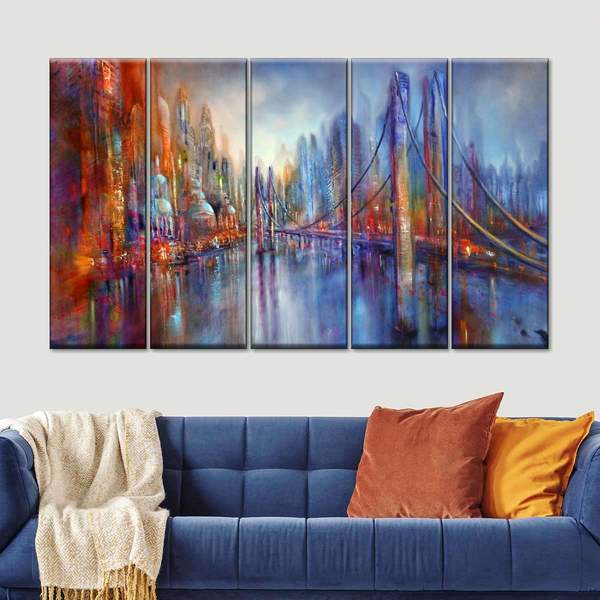
In a living room, the relationship between the art and the furniture below it matters most. The general guideline is that your piece should span roughly two thirds of the width of the sofa or console beneath it, keeping everything proportional and visually anchored.
In a bedroom, art above the headboard tends to look best when it stays within the width of the bed, extended by around ten inches on either side. Going much wider makes the bed feel small by comparison, and going too narrow makes the art feel like an afterthought rather than an intentional choice.
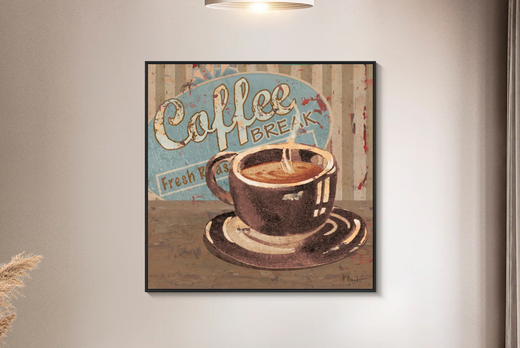
In a dining room, a single large work positioned to be seen from the table usually works better than a gallery arrangement, since people are seated in one place and a cohesive composition rewards that fixed viewpoint naturally. Hallways and entryways are where tall, portrait-oriented pieces really shine, complementing the vertical proportions of those narrow spaces without any extra effort.
According to our art curator, rooms where people spend most of their time sitting down, like a living room or reading nook, it is worth dropping the hanging height slightly lower than the standard rule, since the art should feel connected to how you actually experience the room, not just how it looks when you are standing in the doorway.
Wrap Up!
Decorating a large wall does not have to be overwhelming. Whether you go bold with a single oversized piece, build out a gallery wall with a clear vision behind it, or let color and style guide your choices, the most important thing is that the result feels intentional. A well-decorated wall does not just fill empty space, it sets the tone for the entire room. Take your time, trust the process, and do not be afraid to go bigger than you think you should. On a large wall, that is almost always the right call.

RECENT ARTICLES


CATEGORIES

 GET OUR TIPS!
STRAIGHT TO YOUR INBOX

Follow Us


